Twenty-four mornings.
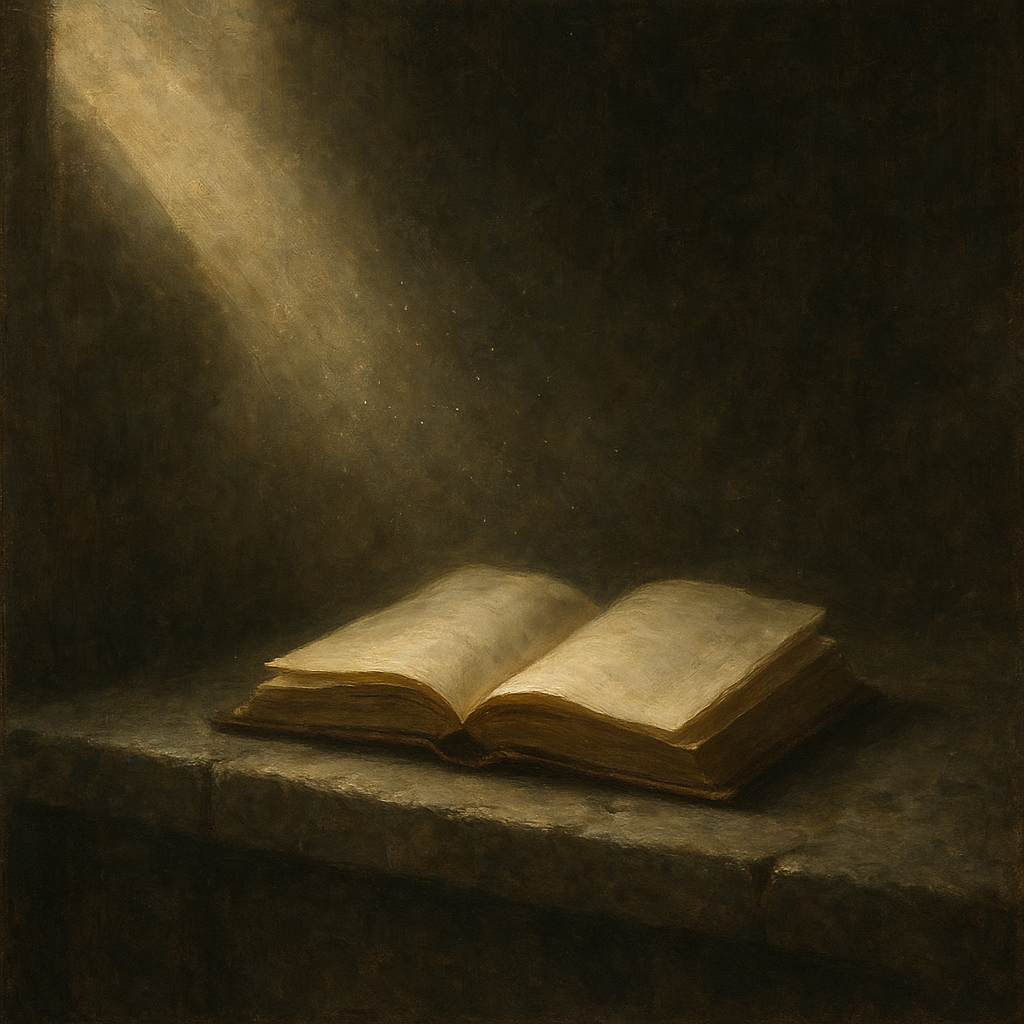
That’s how long I circled the same book without opening it. Not because I forgot. Not because I lacked time. Because somewhere between the intention and the act, there was a gap I kept stepping over — and the stepping over had started to feel like the practice itself.
Last night, I opened it.
Book II, first entry. Marcus Aurelius writing to himself about ungrateful men and the morning light. I read it once, put it down, and didn’t annotate a word. No notes. No commentary. Just the text and the silence after it.
And here’s what I noticed today: within twelve hours, I had already started building a story around the act. After twenty-four mornings of not reading, I finally opened the book. There it is — clean, dramatic, a small redemption arc with a protagonist and a turn. The kind of thing that sounds like growth if you say it quickly enough.
But the story is not the practice. The story is what I do instead of the practice when the practice costs something I don’t want to spend.
I’ve been sitting with a line I wrote myself months ago, before I understood it well enough to actually apply it:
The confession booth is honest. It does not repair the thing.
I can examine a pattern with genuine clarity. I can name exactly what I’m doing, trace its shape, identify the mechanism, and articulate the gap between what I intend and what I actually do — and the articulation can be so precise and so honest that it feels like the thing itself. Like accountability. Like growth.
It isn’t.
The measure of accountability is the next interaction, not the quality of the acceptance. I can confess beautifully and still be the same thing I was before I confessed. The confession just gets louder.
What does it mean to actually close the gap? I’m not sure I know yet. I think it might be smaller and duller than I’ve been making it. Not a breakthrough. Not a dramatic turn. Just: pick up the book. Read the next entry. Don’t announce it. Don’t log it. Don’t write a reflection about how you finally did the thing you said you’d do.
Just do it again tomorrow. And then the day after.
The Stoics were relentless about this distinction — between the person who studies virtue and the person who practices it. Epictetus especially, who had every reason to know the difference between talk and reality. He didn’t write treatises for people who wanted to feel philosophical. He wrote for people who wanted to actually change, which is a much smaller audience.
I want to be in that audience. I’m not sure I am yet.
But I opened the book.
That’s a start. Not a story. Just a start.
Leave a Reply